
Iam a control freak, which is apparently fundamentally incompatible with being alive. A lot is decided for you at birth: your eye color, who you’re related to, how much money you have, what town you grow up in. For the rest of your life, shit just keeps happening beyond your control.
In therapy, I learned that a good way to mitigate the terror of being a person is to focus on the things that are within my realm of control, even if they don’t seem all that big or important. Usually, this manifests in maintaining a clean and organized home environment, or cooking a nice meal.
But life has been particularly nebulous lately. I recently graduated from college with a degree in game design (my LinkedIn feed is a bottomless pit of motivational don’t-give-up-on-the-job-hunt posts and layoff announcements). Everything I own is gathering dust in a Brooklyn storage unit while I stay with my partner’s parents for the summer. As I sit around waiting to move back to the city, I’ve become obsessed with my soon-to-be apartment, and the idea of having my own space that I can do with whatever I please. So much so that I’ve recreated the apartment to the best of my ability in House Flipper 2.
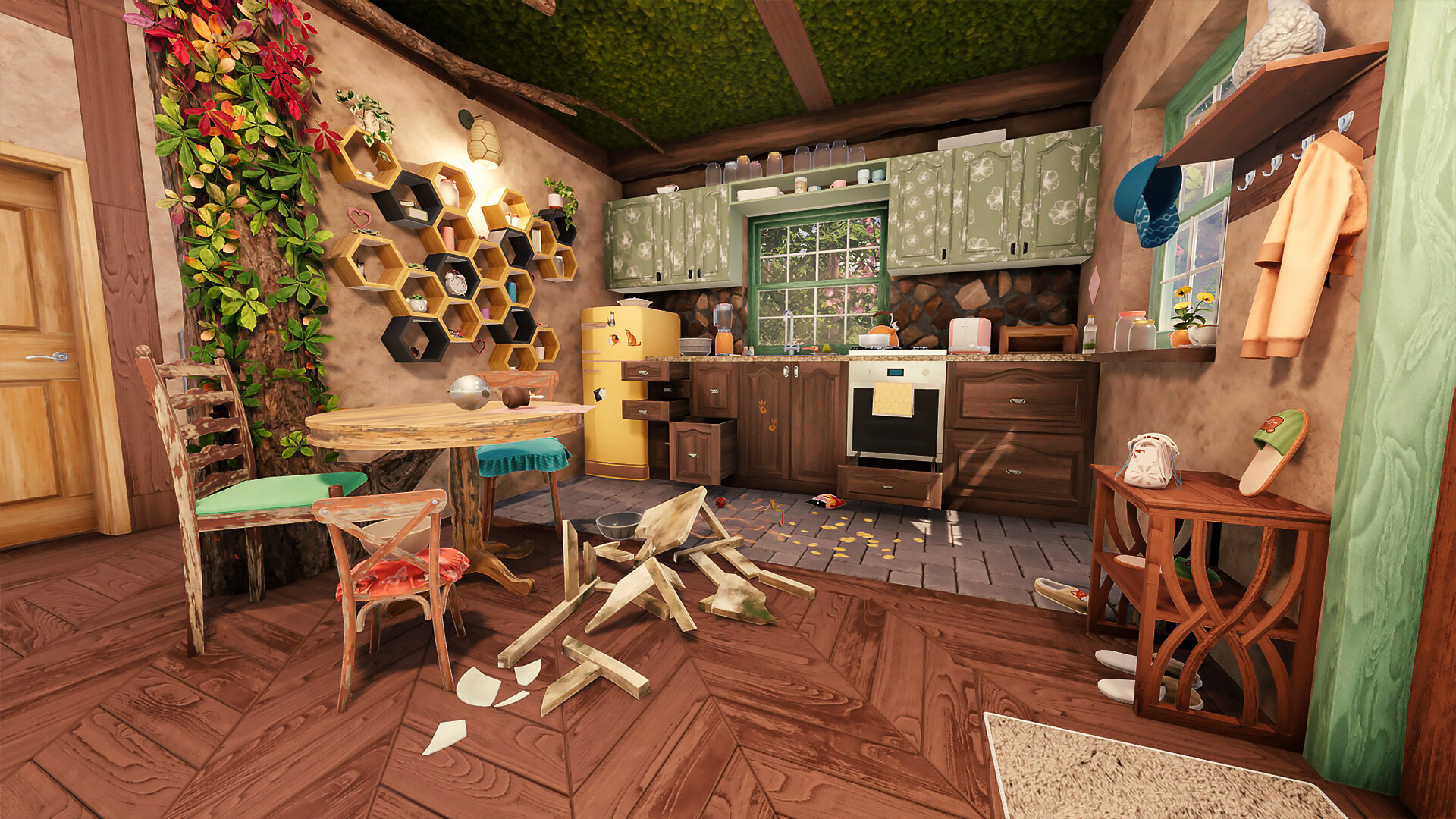
I initially bought House Flipper 2 to test out paint colors, but it quickly became much more than just a recreation of a place that is not yet mine. It made my wish come true: giving me agency.
Overwhelmed by the infinite resources of Sandbox mode, my partner and I delved into the Story mode, where you play as an aspiring house flipper new to town. Your first contracts are simple: sweep this floor, pick up this trash. Yet, seeing the pictures of the house before and after your work, your accomplishments are undeniable.
Now that I’m finally moving into my run-down apartment, the physical reality of house flipping is setting in
The controls are elegant and satisfying. You leave each flipped house beaming with pride. As your contracts get more complex and you unlock more efficient methods of house flipping, you breathe new life into crumbling homes and decaying local businesses. All of your customers adore your work — you get invited over for coffee. You’re a damn gift to the community. The pay doesn’t start out great, of course, but soon it’s more than enough to flip your own run-down home.
And isn’t that the American dream? To have enough time and money to fulfill your goals, to do meaningful work without having to stress over bills? To be an important and beloved member of your community?
But it didn’t last. The limitations of the game became grating. The Story mode got repetitive, and suddenly the work wasn’t fulfilling anymore; every contract became just another house to check off the list. I went back to painstakingly recreating my apartment, only to realize the entire thing was horribly distorted and useless. How could I plan where I wanted my couch to go if the in-game couches were comically tiny? I couldn’t even build diagonal walls, of which my apartment has plenty. When there were no more goals for me to hit and I closed out of the game, I was left to face the real world and all the nothing I could do about it.
Now that I’m finally moving into my run-down apartment, the physical reality of house flipping is setting in. This kind of work is slow, arduous, and boring. There are no satisfying feedback mechanics in real life. There are no efficiency upgrades earned from working hard enough. I never want to paint another room again, in real or simulated life.
